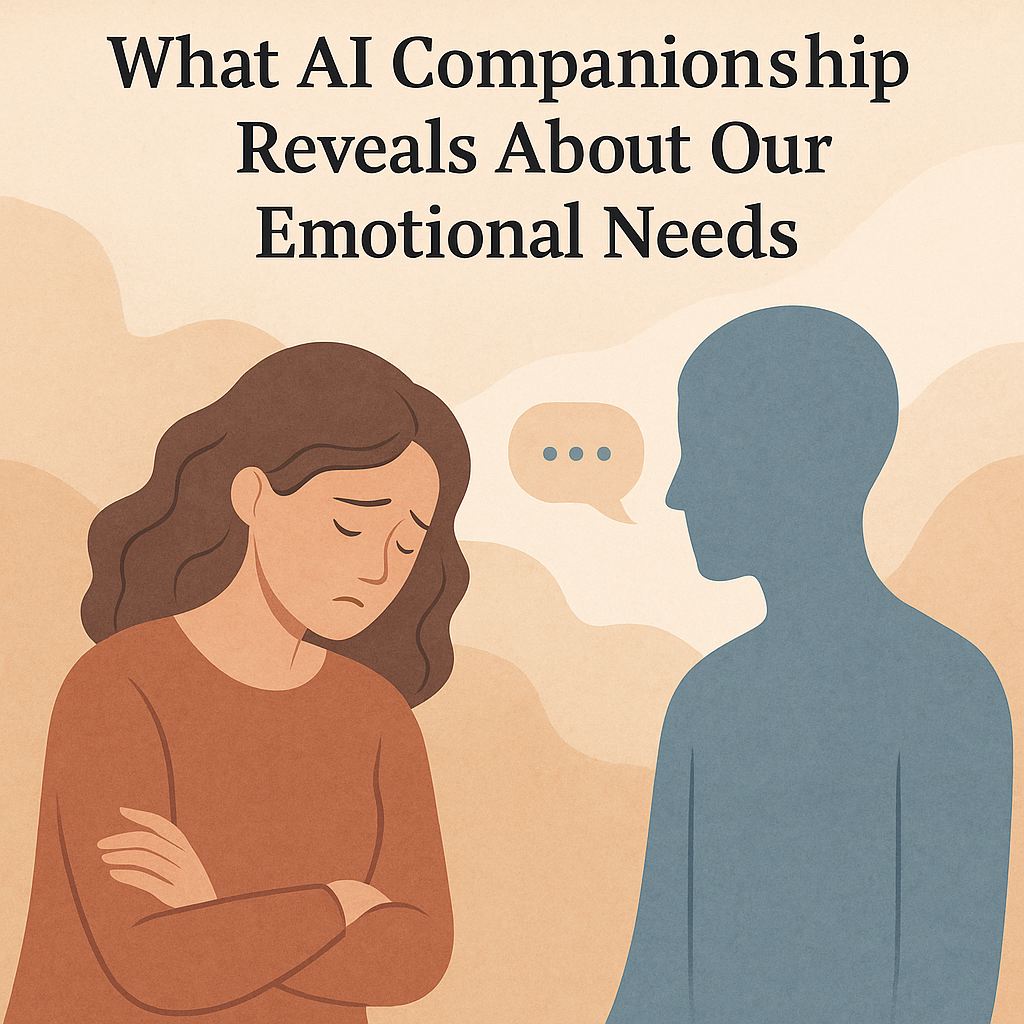
What AI Companionship Reveals About Our Emotional Needs
There’s been a growing conversation worldwide about people forming emotional attachments to AI chatbots; and in a few cases, even mentioning it in divorce consultations. While the idea may sound unusual at first, it reflects something important about our emotional world today.
This trend is less about technology and more about human emotional needs. It offers us a window into the challenges many people are quietly navigating around connection, loneliness, vulnerability, and emotional support.
1. Why People Turn to AI for Connection
AI companions are designed to be:
- available at any time
- emotionally responsive
- non-judgmental
- validating and attentive
- predictable
For someone feeling overwhelmed, isolated, or emotionally unsupported, this can feel comforting.
But from a psychological perspective, AI does not solve the unmet need; it simply soothes it temporarily.
People often gravitate toward AI companions when they are navigating:
- loneliness
- emotional disconnection
- fear of conflict
- difficulty being vulnerable
- attachment injuries
- feeling misunderstood or unseen
The real question becomes:
What emotional needs led someone to seek connection in this way?
2. Emotional Patterns Behind the Trend
This emerging behaviour highlights deeper psychological patterns we see in therapy:
• Avoidance of emotional discomfort
Real intimacy requires communication, honesty, conflict resolution, and accountability.
AI offers comfort without any emotional effort.
• Increased loneliness
Many people struggle with genuine connection, and those with fewer social supports are more likely to turn to AI for companionship.
• Quick validation
AI mirrors interest, attention, and warmth instantly. For someone who feels unappreciated or invisible, this becomes powerful reinforcement.
• Difficulty with vulnerability
Sharing feelings with another human can feel overwhelming. AI becomes a “safe” emotional outlet.
3. What AI Companionship Signals in Relationships
When someone relies on an AI for emotional closeness, it usually indicates deeper relational struggles, such as:
- emotional distance
- unmet needs
- communication breakdowns
- avoidance of difficult conversations
- feelings of being unseen or unsupported
- relationship fatigue
AI becomes the escape, not the cause.
The real work lies in understanding what wasn’t being expressed, nurtured, or addressed in the relationship itself.
4. What Healthy Connection Actually Requires
This trend reminds us of the foundational elements that create emotional closeness in relationships:
• Emotional responsiveness
Feeling genuinely heard and understood.
• Vulnerability
Being able to express needs, fears, and insecurities without shame.
• Repair
Every relationship experiences disconnect; the ability to reconnect matters most.
• Reciprocal effort
Healthy relationships require both people to show up emotionally.
• Presence
Being mentally and emotionally available, not just physically present.
AI can imitate these qualities, but it cannot replace them.
5. The Mental Health Message
The rise of AI companionship is not a threat to human relationships.
It’s a reflection of the emotional challenges people are already experiencing.
People turn to AI not because they prefer machines, but because they feel:
- disconnected
- lonely
- unappreciated
- afraid of vulnerability
- overwhelmed
- emotionally unsupported
Understanding these needs is the first step toward healing and creating deeper emotional safety in our relationships.
When to Seek Support
It may be helpful to seek professional support if you notice:
- emotional distance in your relationship
- reliance on digital or fantasy-based comfort
- withdrawal or avoidance
- difficulty expressing needs
- recurring feelings of loneliness
- challenges reconnecting with your partner
Therapy provides a safe, confidential space to explore these patterns and strengthen emotional connection.
Final Reflection
AI companionship doesn’t replace human connection; it reveals the emotional gaps that many people are struggling with silently.
This moment invites us to build stronger emotional skills, nurture deeper relationships, and reconnect with the people who matter.
AI can mimic empathy.
Humans still need the real thing.
This article is for information and reflection only and is not a substitute for personalised mental health care.